In the high-stakes environment of commercial food service, zero tolerance is the standard for pest management. While a stray pest might occasionally slip through a delivery entrance, discovering active indicators of German or American cockroaches inside prep zones, storage areas, or dining rooms signals an urgent crisis. Knowing the physical evidence that distinguishes a minor nuisance from a full-scale cockroach infestation protects your brand reputation, prevents critical health code violations, and stops foodborne illness vectors before they compromise your kitchen.
1. Daytime Sightings and Cluster Gatherings
Cockroaches are strictly nocturnal insects that spend daylight hours hiding deep inside dark wall voids, motor compartments, and warm utility corridors.
- The Biological Indicator: When cockroaches are forced out into the open during operating hours, it indicates that their harborage sites are severely overcrowded.
- The Risk Factor: Spotting even a few roaches crawling near dishwashers, ice machines, or cooklines in broad daylight points directly to thousands more multiplying unseen behind your stainless steel equipment.
2. Distinctive Fecal Accumulation and Smear Marks
As cockroaches forage for starches, grease, and moisture, they leave behind clear signs of continuous activity.
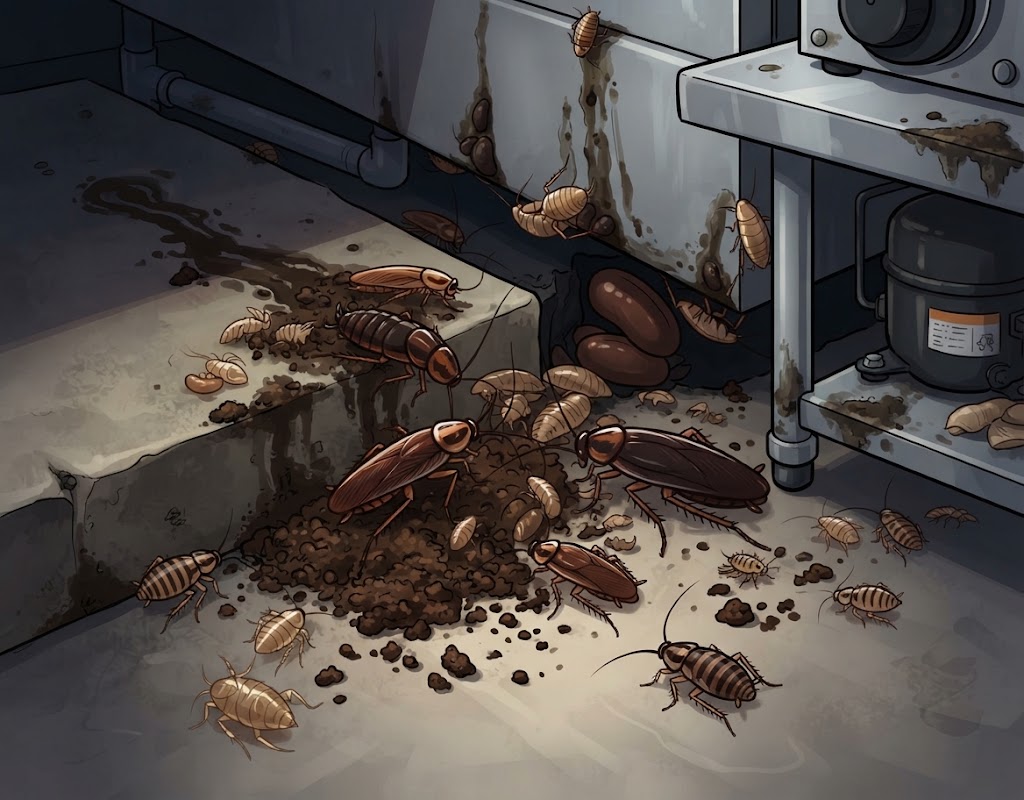
- The Physical Evidence: German cockroaches produce droppings that resemble coarse ground black pepper or coffee grounds, typically found along cabinet hinges, shelving corners, and baseboards. Larger species leave cylindrical, blunt-ended droppings.
- The Smear Factor: In areas with high humidity or moisture, roaches create dark, irregular brown or black smear marks and liquid stains along walls and overhead pipe junctions.
3. Unusual Musty Pheromone Odors
An established cockroach population emits distinct chemical signals that alter the sensory environment of a commercial kitchen.
- The Sensory Cue: Severe infestations release volatile organic compounds and aggregation pheromones that produce a strong, oily, or musty odor.
- The Audit Impact: If staff or visiting inspectors notice a persistent foul or oily scent near dry storage racks or floor drains despite deep cleaning, it often signals an advanced subterranean or wall-void nesting site.
4. Shed Exuviae and Cast Skins
As cockroaches develop from nymphs into mature adults, they undergo multiple molting stages, leaving physical debris behind.
- The Physical Evidence: You will find delicate, translucent, light-brown cast skins ($exuviae$) tucked inside cardboard boxes, equipment motor housings, and tight utility crevices.
- The Allergen Risk: Accumulated cast skins and decomposing insect fragments degrade into airborne allergens that can trigger severe asthma and allergic reactions among kitchen staff.
5. Egg Cases (Oothecae) in Hidden Harborages
The ultimate indicator of a reproducing population ready to spiral out of control is the presence of egg cases.
- The Physical Evidence: Female cockroaches carry or deposit small, dark, bean-shaped egg cases known as $oothecae$. A single German cockroach egg case can contain up to 40 developing nymphs.
- The Proliferation Threat: Discovering clustered or hatched $oothecae$ behind hot water heaters, under prep tables, or inside electrical panels means the reproductive cycle is actively accelerating.
Frequently Asked Questions for Restaurant Managers
- Q: Why do cockroaches suddenly appear during the day in a commercial kitchen?
- A: Daytime sightings occur when harborages become critically overcrowded, forcing roaches out to forage for food and water due to extreme competition.
- Q: Where are the most common hiding spots for German cockroaches in restaurants?
- A: They cluster in warm, dark, humid micro-environments near refrigerator motor compressors, electronic control boxes, utility gaps, and dishwashing pits.
- Q: What immediate action should a manager take upon finding multiple signs of a cockroach infestation?
- A: Immediately isolate affected food products, document the specific locations, and contact a licensed commercial pest elimination specialist for emergency structural treatment.
Audit-Proof Prevention and Elimination Protocol
- Seal Structural Ingress Points: Utilize expanding commercial sealants and copper mesh to close gaps around plumbing lines, electrical conduits, and wall penetrations.
- Enforce Strict Sanitation Standards: Eliminate food sources by sweeping up crumbs nightly, wiping down grease traps, and storing all dry goods in heavy-duty, airtight plastic containers.
- Schedule Routine Professional Audits: Partner with commercial extermination experts for integrated pest management (IPM) treatments, sticky-trap monitoring, and preventative baiting programs.