When a health inspector walks into a commercial kitchen, few things trigger a red flag faster than the presence of small flying insects around the bar, dish pit, or prep stations. While restaurant managers often view fruit flies as a minor cosmetic annoyance, local health departments treat them as critical indicators of severe sanitation failures. Understanding how an unchecked fruit fly population leads directly to failed health inspections, costly fines, and public permit suspensions is vital for protecting your establishment’s reputation and bottom line.
The Regulatory Risk: Why Inspectors Penalize Fruit Flies
Health inspectors evaluate pests under strict public health codes that govern vector contamination and food safety. Fruit flies do not merely hover near produce; they actively breed in decaying organic sludge, sewage lines, and rancid grease buildup.
- Pathogen Mechanical Transmission: As fruit flies move between floor drains, garbage cans, and pristine cocktail garnishes or open food prep surfaces, their bodies and mouthparts mechanically transfer dangerous foodborne pathogens, including E. coli, Salmonella, and Listeria.
- Adulteration of Food and Beverage: Under standard health codes, any ingredient or beverage exposed to insect contamination is legally classified as “adulterated.” Finding fruit flies inside open liquor bottles or garnish trays results in immediate food product condemnation and mandatory disposal.
- Critical vs. Non-Critical Violations: While structural issues might result in minor write-ups, active insect infestation in food handling zones is frequently categorized as a critical health violation requiring corrective action within 24 hours or immediate facility closure.
High-Risk Zones That Trigger Inspector Citations
Inspectors target specific recurring trouble spots during an audit. Failing to maintain these zones guarantees a deduction on your health score:
- Unsanitized Bar Drains and Speed Wells: Thick organic biofilm in hidden drain lines serves as an active breeding ground that inspectors check with flashlights.
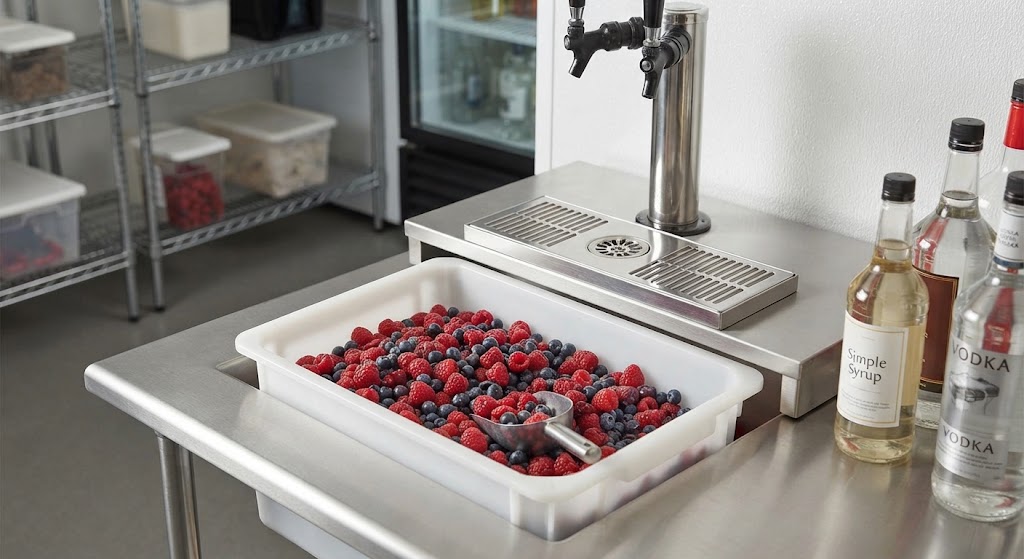
- Improperly Stored Produce and Open Bins: Leaving fresh citrus, fruit garnishes, or unsealed syrups uncovered on counters invites instant egg-laying and severe food safety citations.
- Neglected Garbage and Recycling Storage: Sticky floor mats, unwashed mop buckets, and unsealed organic waste containers outside walk-in coolers signal a systemic failure in daily closing sanitation.
Frequently Asked Questions for Restaurant Owners and General Managers
- Q: Can a restaurant fail a health inspection solely because of fruit flies?
- A: Yes. An active fruit fly infestation in food preparation or bar service areas can be cited as a critical health code violation, which can lead to failed inspections, mandated re-audits, or temporary permit suspension until professional remediation is verified.
- Q: What specific health code violation category do fruit flies fall under?
- A: Fruit flies are typically cited under public health codes relating to “vermin and pest control,” “adulterated food protection,” and “cleanliness of equipment and utensils.”
- Q: How can restaurants prove to health inspectors that they are actively managing fruit fly risks?
- A: Maintaining a detailed pest control logbook with service dates, keeping receipts for specialized enzymatic drain cleaners, and ensuring all open food and produce containers use tight-fitting lids provide clear proof of active prevention to inspectors.
Audit-Proof Prevention Protocol
- Institutionalize a Deep-Clean Drain Regimen: Shift away from simple hot water rinses and utilize professional-grade biological or enzymatic drain treatments every week to eliminate the underlying organic sludge where larvae feed.
- Enforce Strict Container Standards: Mandate that all open fruit garnishes, syrups, and open-pour bottles are stored in sealed, airtight containers or refrigeration units immediately after prep service ends.
- Partner With Certified Pest Management: Establish routine, documented service agreements with commercial pest elimination specialists to intercept micro-infestations before health inspectors arrive.